
In 1954 Aldous Huxley wrote The Doors of Perception, reflecting on his experiments with mescaline and exploring how human perception shapes reality. Huxley proposed that the brain functions as a “reducing valve”, filtering the vastness of experience into what is necessary for daily survival. Altered states of consciousness, he argued, can momentarily reveal a richer and more immediate sense of existence beyond ordinary awareness.
This string quartet is dedicated to the memory of John and Jim.
John was John Davies, and he was my friend.
He was tall, ruggedly handsome, elegant, and a distinctive presence at the Golden Ball pub in York. He worked as a builder; his house was beautifully decorated with touches of genuine artistry. He was bright and instinctively unpleasant, could hold his beer — most of the time — and smoked Capstan Full Strength, and among many other dubious character qualities, admired and voted for Margaret Thatcher. Not the most obvious foundations for friendship, but we managed it. Over the years our friendship matured like the fine malt whiskies he finished the evening with. I loved him very much, and it broke my heart when he died a well-merited early death at the age of 49.
Jim was Jim Morrison, frontman of The Doors.
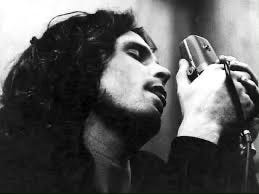
Morrison combined poetry, charisma and instinctive musicality, using his deep baritone voice and dramatic phrasing to turn simple rock songs into something atmospheric and theatrical. His real strength lay in presence and interpretation, drawing on blues, literature and performance to give The Doors a sound and identity larger than the music alone. Personally shy offstage, he used cannabis and psychedelics in the band’s early years, though heavy drinking later became central to his life and increasingly shaped his erratic and self-destructive behaviour. He died at the age of 27.
John thought Jim Morrison was the real deal: beautiful, charismatic, enigmatic and undefinable. He lent me No One Here Gets Out Alive (1980) by Jerry Hopkins and Danny Sugerman, the first Morrison biography. It was somewhat sycophantic, bloated, and even suggested Morrison may have faked his own death. I wasn’t convinced, and neither was The Doors’ guitarist Robby Krieger. But the companion video — featuring interviews with Krieger, John Densmore and Ray Manzarek — showed rare performance footage that captured something of the band’s strange electricity.
Riders on the Storm (1990) by John Densmore, The Doors’ drummer, is a much better book: a candid memoir of the band’s rise, its creative dynamics, and the tensions surrounding Morrison. It can also be read, in its way, as a love story.
I wrote String Quartet No. 2 in response to John’s death.
The work is ‘conservative’ in that it follows a sonata-form blueprint: introduction, exposition, development, recapitulation and coda. It also suggests a tonal journey – the first subject in Db and crash-landing in a blaze of E major. But, as John — like Thatcher — was not a true Conservative, the piece does not obey traditional structural rules or the expected functions of tonality.
Instead, the work is shaped by symmetry, both local and architectural. Order becomes balance; momentum emerges as internal energy; rhythm itself becomes a driver. There is, like a classical prototype, a resolution — but one that glows in a transcendental, altered state of consciousness.
Or not.
As the light fades, we are left with Jim Morrison’s tribute to soul singer Otis Redding — who died in December 1967 — from Runnin’ Blue, on the often underrated album The Soft Parade (1969):
“Poor Otis, dead and gone /
Left me here to sing his song
Pretty little girl with a red dress on /
Poor Otis dead and gone”
The song itself echoes older folk and blues mourning traditions such as “Po’ Howard”, where someone loved has gone and the singer carries the torch.
And maybe, just maybe, the piece carries a torch for my friend, John Davies.
This essay also appears as part of Steve Crowther’s ongoing writing on Substack, An Outsider’s Perspective.
https://clueless13.substack.com