by David Lancaster
One of the great joys of collaboration is that of discovery: I had never really engaged with the poetry of Gerard Manley Hopkins and my previous encounters with his work had not been encouraging. In my mind he was lodged in a folder marked ‘Victorian, religious, difficult…’ and as such wasn’t a poet that I would naturally turn to for texts to be set to music. So I must confess that my heart sank a little when the Elysian Singers proposed a concert of Hopkins’ poetry. I was in Manchester when I received the email, having spent a weekend recording new song settings of Dylan Thomas, and so I dropped into Waterstones on my way back to Victoria Station and bought the collected edition of Hopkins’ writing to read on the train home.

Hopkins was born into an artistic environment: his parents and siblings were poets, painters and composers, well-connected to some of the major figures in the Arts and Crafts and Pre-Raphaelite movements. At Balliol College, Oxford he formed a lifelong friendship with Robert Bridges (a future Poet Laureate) and met Christina Rosetti. Hopkins himself was an accomplished artist and we know that he loved music, producing several choral compositions.
But into this privileged life dark clouds formed which would culminate in bouts of severe depression and a life of anguish: one the one hand he loved the rich beauty of poetry and art but on the other he was a highly ascetic Christian who believed that his religion demanded that he subject himself to deprivation and hardship. His family were firm Anglicans but as a young man he converted to Catholicism, eventually becoming a Jesuit priest. (He once argued that most people drank more liquids than they really needed and bet that he could go without drinking for a week; he persisted until his tongue was black and he collapsed unconscious). This asceticism ultimately led him to a decision not to publish his poetry and thereby deny himself an audience for his work. In 1889 he was working in Dublin, increasingly unhealth and melancholy since the conflict between his religious ‘obligations’ and his poetic talent made him feel he had failed at both, and it was only following his death that year that his friend Robert Bridges collected and published the poetry for the first time. Gerard Manley Hopkins was never able to reconcile what biographer Paul Mariani described as, on the one hand ‘the selflessness demanded by Jesuit discipline; on the other, the seeming self-indulgence of poetic creation’.
There have been many musical settings of Hopkins’ works, as the Late Music programme testifies. There is also the ‘Two Settings of Gerard Manley Hopkins’ by Elizabeth Maconchy (Pied Beauty and Heaven Haven) and several in the sphere of popular music, including songs by Natalie Merchant (Spring and Fall) and the band Mortal (God’s Grandeur). Interestingly, another author/composer, Anthony Burgess, also set Hopkins’ text and made several references to Hopkins in his writing, notably in the ‘Enderby’ series of novels.
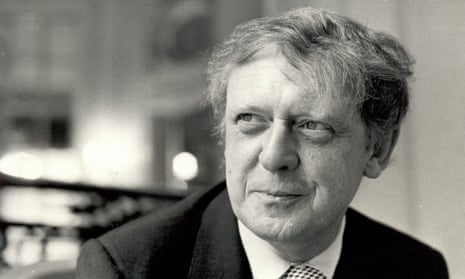
Anthony Burgess
Why was Hopkins’ writing so attractive to musicians? A great deal of this must be due to what he calls the ‘sprung rhythm’ of his poetry. This was a term that Hopkins invented for the use of irregular feet in poetic metre, which he claimed to have discovered in English folksong, and which led the way for freer poetic forms of modernist poets in the twentieth century, including Eliot, Auden and Thomas. Sprung verse is in many ways closer to the natural rhythm of speech, something that most composers attempt to emulate in order to allow their music to heighten the meaning of the lyrics.
I actually composed two settings of Hopkins’ words for the Elysian Singers! The first poem that leapt out of the pages at me was a late, unfinished tribute to Margaret Clitherow, the York woman who refused to renounce her Catholicism and was executed by ‘Peine Forte et Dure’ close to the Ouse Bridge, but that epic narrative proved too long for the Late Music programme. (It is still waiting for a first performance, if any York-based choir would like a challenge!). As an alternative I set Hopkins’ tribute to composer Henry Purcell; as mentioned above, Hopkins’ parents were keen musicians and as a young man he would certainly have been introduced to the music of Purcell. His admiration for the composer was slightly marred by Purcell’s Protestantism, which the Catholic Hopkins regarded as ‘heresy’, hoping that the beauty of Purcell’s music would still allow him access to paradise. This piece was not only short enough for the programme but encouraged Sam Laughton (conductor of the Elysian Singers) to programme some of Purcell’s own music alongside the Hopkins settings.
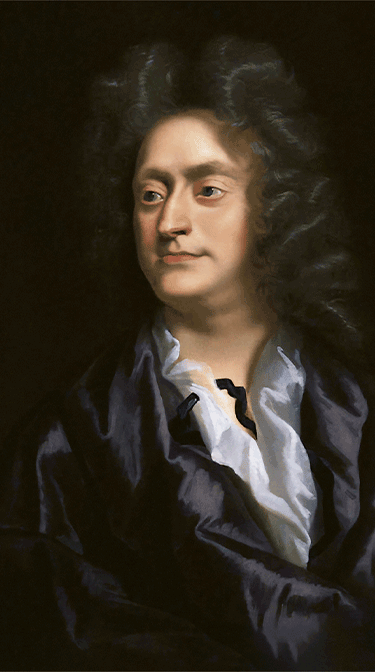
Henry Purcell
The Elysian Singers of London will perform my ‘Henry Purcell’ at Late Music on Saturday 6th June at 7:30 pm, in a programme that also includes settings of Hopkins by Benjamin Britten, Allan Bullard, Bob Chilcott, Ian Stephens and Samuel Barber. Composer David Power (whose ‘Four Visiak Settings’ complete the programme) will give a pre-concert talk at 6:45.
For further details and tickets: York Late Music